
Replicating Blueprints with Physics
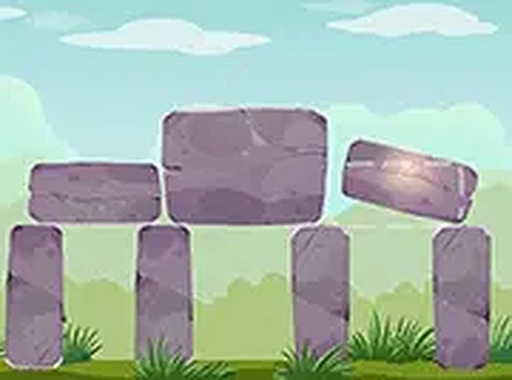
Each level in Megalith Stone Stack Puzzle gives you a blueprint to reproduce using stones pulled from a pile. The challenge is not just matching the shape — it is keeping the structure upright. A physics engine governs how stones settle, so a piece that looks correct can still slide or topple if its weight is not supported. You select stones with the mouse, drag them into position, and rotate them with the scroll wheel for a better fit.
Reading Balance Before You Place
Because every stone has realistic weight, placement order matters. A heavy block set too early can make later additions unstable. The blueprint shows the target arrangement, but it does not tell you how to sequence your moves. That decision is left to you, and it is where the strategy tag earns its place. Rotating a stone changes its contact points, which can mean the difference between a locked-in fit and a slow collapse.
Desktop Controls and Session Flow
The game runs in a browser with no download required and is built for desktop play. A keyboard and mouse give the most precise control, and full screen mode removes distractions for longer sessions. Levels are self-contained: you complete one by stacking all its stones without any falling. There is no timer or resource meter described, so the pressure comes from the physics itself rather than artificial limits.
Who This Suits
Patience matters more than speed here. Players who enjoy planning a sequence and adjusting when a structure shifts will get the most from it. If you prefer fast reactions or narrative-driven games, the deliberate pace may feel slow. The reward is watching a wobbly arrangement finally hold — a small, earned victory that repeats with each new blueprint.







Editorial Notes