
Reading Images, Not Instructions
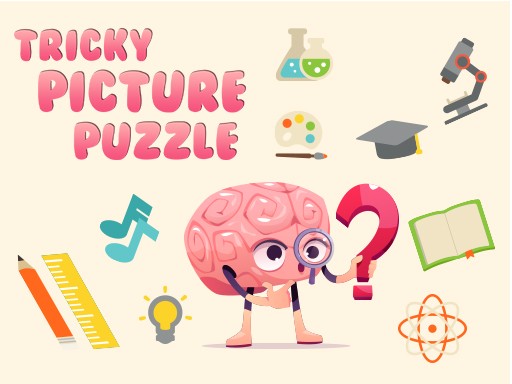
Picture Puzzle Brain Teaser builds its challenges around images rather than text prompts. Each level presents a picture containing hidden clues, and the player's job is to notice what is out of place, unusual, or inconsistent. The answer usually depends on careful observation before any logical deduction can begin. Because the instructions are simple and the controls are minimal, new players can start immediately without learning a complex interface.
Puzzle Types and Skill Demands
The collection mixes several kinds of visual riddles. Some ask players to recall details from earlier levels, turning memory into a solving tool. Others require matching shapes or colors accurately, where a quick tap or swipe is part of the challenge. A third group leans on pure logic: find the anomaly in the picture, then reason about what it implies. This variety keeps the game from settling into a single rhythm, and it explains why accuracy matters as much as speed.
Difficulty Curve and Pacing
Difficulty increases gradually as players move through the levels. Early puzzles establish the basic observation habit, while later ones combine memory, logic, and reflex demands in the same image. Most puzzles have no time limit, so players can study a picture for as long as they need. That design choice makes the game comfortable for short breaks and longer sessions alike, and it keeps frustration low without removing the mental challenge.
Who It Suits
The content is family-friendly and designed for players of all ages, including children and adults. Regular updates add new levels and challenges, so the puzzle pool grows over time. Playing with friends can introduce a competitive element and expose different solving strategies. The game rewards patience and repeated observation rather than prior gaming skill, which makes it accessible to casual players who want a mental workout without pressure.





Editorial Notes