
Course Design and Movement Flow
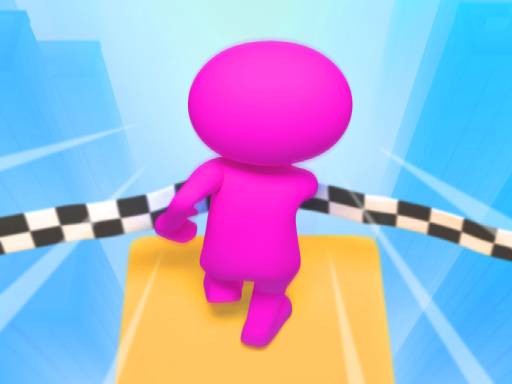
Each race in 3D Parkour Runner Race unfolds across a 3D course built from walls, ropes, slopes, and monkey bars. These elements are not decorative—they define the rhythm of every run. Walls demand wall-to-wall jumps, ropes require timed grabs, slopes let you build speed through slides, and monkey bars call for deliberate swings. A course rarely repeats the same obstacle sequence, so reading the environment ahead matters as much as reacting to what is directly in front of you.
Real-Time Competition and Momentum
Races are held in real time against other players, turning every course into a test of consistency rather than raw speed alone. Sliding and flipping serve dual purposes: they help you clear gaps and reach higher platforms, but misjudging either action costs momentum and time. The game rewards players who maintain a steady flow instead of rushing into obstacles. Because opponents are visible during the race, their path choices can reveal alternate routes or confirm which lines are fastest.
Controls and Accessibility
Touch controls are intentionally simple: jump, climb, slide, and flip are mapped to straightforward inputs. This low barrier to entry means new players can start racing quickly, while experienced players find depth in chaining actions without breaking stride. The challenge comes from timing and route selection, not from memorizing complex button combinations.
Progression Through Practice
Regular updates introduce new levels and challenges, keeping the course pool from growing stale. Practicing individual courses helps players learn obstacle placement and refine their timing. Watching how other racers approach a section can highlight shortcuts or safer lines. Over time, familiarity with course layouts reduces hesitation and improves decision-making during live races.



Editorial Notes