
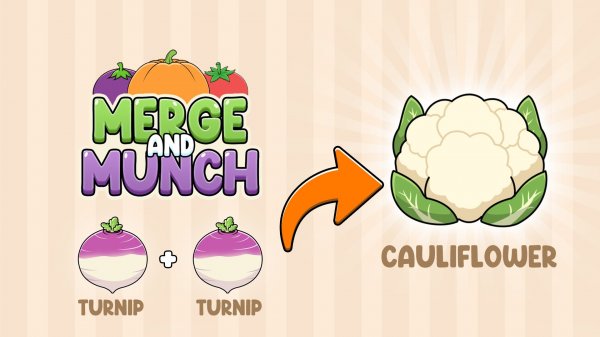
Merging Mechanics and the Pumpkin Goal
Produce Stack Merge takes a familiar matching concept and slows it down. Instead of tapping pairs, players watch vegetables fall from above and position them so identical items touch. A successful contact merges the two into a larger vegetable. The cycle continues until the largest possible produce, the pumpkin, appears. The objective is not speed but foresight: each drop changes the shape and stability of the pile.
Physics, Weight, and Spatial Planning
What separates this game from simple matching puzzles is its physics layer. Every vegetable has weight and a distinct shape, so it settles against its neighbors rather than snapping to a grid. A poorly placed item can shift or topple the stack, making later merges harder. Players must weigh balance, stability, and the container's limited space before releasing each piece. That constraint turns a casual drop into a small spatial decision.
Cartoon Style and Relaxed Pace
The presentation supports the low-pressure design. Vegetables carry friendly faces and gentle animations, and the color palette is soft enough to keep each type easy to tell apart. The screen stays uncluttered, which matters when the pile grows tall and every new drop needs a clear read of the layout. Nothing in the art style pushes urgency; the game is built for calm, repeated sessions.
Endless Format and Replay Value
Produce Stack Merge runs in an endless format. Each merge adds points, and play continues until the vegetables reach a certain height. Because drops are randomized, no two sessions unfold the same way, and the only benchmark is the player's previous score. The loop of dropping, merging, and growing is simple to learn, but the physics and limited space give it enough friction to reward repeat attempts.








Editorial Notes