
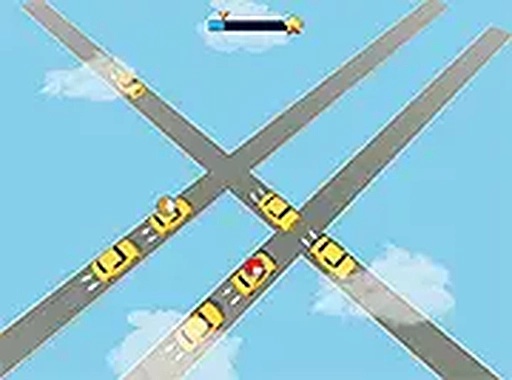
Signal Management at the Intersection
In Crossroad Control Puzzle, you take the role of a traffic manager at a series of intersections. Your task is to switch traffic signals so that cars and trucks can move through without stopping or colliding. Each junction has its own arrangement of lanes and crossing points, so the sequence that works in one level will not necessarily work in the next. The game asks you to think several moves ahead and rewards careful observation and precise timing rather than speed.
How the Difficulty Ramps Up
Early levels present simple two-way crossings that introduce the basic idea of alternating right of way. As you progress, later stages add multiple lanes, turning vehicles, and tighter schedules. The number of vehicles on screen increases, and the timing windows between safe passes shrink. This gradual ramp-up keeps the challenge fresh without overwhelming new players, because each new element appears only after the previous one is understood.
Controls and Interface
You can manage traffic lights using either a mouse or a keyboard. Clicking on a signal changes its color, stopping one flow while allowing another to proceed. The game runs in any modern browser and supports full-screen mode for a clearer view of the road. Controls are responsive and easy to learn, letting you focus on solving the puzzle instead of fighting the interface.
Design Philosophy and Replay Value
Crossroad Control Puzzle is built around logical planning and sequential decision-making. Each level is a self-contained puzzle where one wrong move can lead to a traffic jam. There are no random elements or hidden mechanics; every outcome depends on your choices. Graphics are clean and functional, with clear road markings and distinct vehicle types, while sound effects provide gentle feedback for signal changes and vehicle movement. After completing a stage, you can revisit it to try for a perfect run with no mistakes. The game does not include timers or scores, encouraging a relaxed pace where careful thought is rewarded over speed.








Editorial Notes