
Cooperative Combat System
Urban Brawl Team Fighter focuses on teamwork. Two players each control a character, moving through side-scrolling street stages. The goal is to defeat all opponents by combining attacks and defenses. One player can distract enemies while the other lands hits. The game rewards coordination over individual skill. Players can revive each other, making partnership essential for progress.
Control Scheme and Responsiveness
Each player uses a separate set of keyboard keys. Player 1 moves with W, A, S, D, jumps with Space, attacks with F or G, and defends with H. Player 2 moves with W, A, S, D, jumps with L, attacks with P or O, and defends with I. The controls are simple and responsive, allowing players to focus on strategy rather than complex inputs. The game is designed for quick learning, so new players can jump in immediately.
Visual Style and Atmosphere
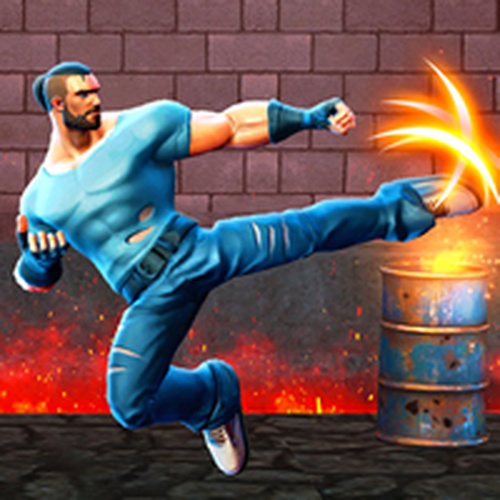
The game uses vibrant, colorful graphics that give each street stage a lively feel. Backgrounds feature urban elements like buildings, streetlights, and storefronts. Character sprites are clear and distinct, making it easy to track positions during fast-paced action. The art style is reminiscent of classic arcade brawlers but with modern polish. Animations are smooth, and visual feedback for hits and blocks is clear.
Stage Design and Enemy Patterns
Each stage presents a different street environment, from alleyways to main roads. Enemies appear in waves, with patterns that become more complex as players advance. Some opponents rush directly, while others hang back and throw projectiles. Learning these patterns is key to avoiding damage. The stages are linear but offer some environmental elements, like barrels or walls, that can be used for tactical advantage.
Progression and Replayability
The game includes a story mode that follows a simple narrative: characters must clear the streets of troublemakers. Each completed stage unlocks the next. There is no leveling or character customization, keeping the focus on pure arcade action. The two-player mode adds significant replay value, as strategies change with a partner. Players can also try different character choices if multiple are available, though the input does not specify how many.






Player Comments
0 comments