
Core Concept & Setup
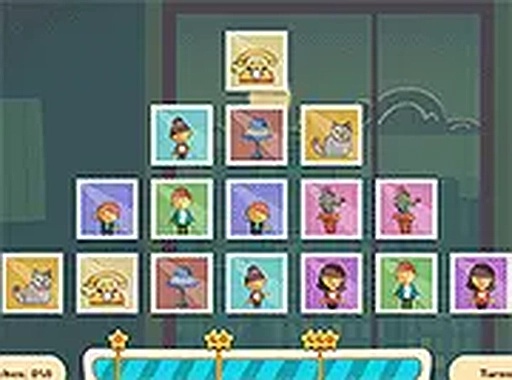
Household Faces Matching Game presents players with a grid of face-down cards. Each card hides a portrait of a different family member. The objective is to turn over two cards at a time, searching for identical images. When a match is found, the pair stays visible. Non-matching cards flip back after a brief pause. The game ends when all pairs have been uncovered. This straightforward loop forms the foundation of the experience, making it accessible to newcomers while still offering a satisfying mental challenge.
Visual Design & Theme
The artwork centers on a warm, domestic aesthetic. Each character portrait is distinct and friendly, helping players build associations between faces and positions. The color palette uses soft, inviting tones that reduce eye strain during extended play. Cards are large enough to see clearly on small screens, and the background remains uncluttered. This thoughtful design keeps the focus on the puzzle itself, without distracting animations or loud effects.
Platform & Accessibility
This game runs entirely within a web browser, removing the need for any software installation. It adapts to different screen sizes, so it works equally well on a phone held in one hand or a desktop monitor. A full-screen option is available for those who prefer an expanded view. The interface uses simple touch or click controls, and there are no time limits or penalties for slow play. This makes it suitable for short breaks or longer sessions alike.
Progression & Difficulty Curve
Early rounds use a small number of cards, allowing players to get comfortable with the mechanics. As the player advances, the grid expands, requiring more careful observation and memory retention. The game tracks the number of attempts, giving players a clear metric for improvement. While the core rules never change, the growing complexity keeps the brain engaged. Players often develop personal strategies, such as focusing on one area of the grid at a time, to manage the increasing load.
Family-Friendly Appeal
The theme of a close-knit household makes this game particularly appealing for groups of different ages. Parents and children can play together, taking turns to flip cards and discuss the characters. The non-competitive nature encourages cooperation rather than rivalry. There are no violent or mature elements, and the pace is relaxed. This makes it a safe choice for classrooms, family gatherings, or quiet afternoons at home.





Player Comments
0 comments